
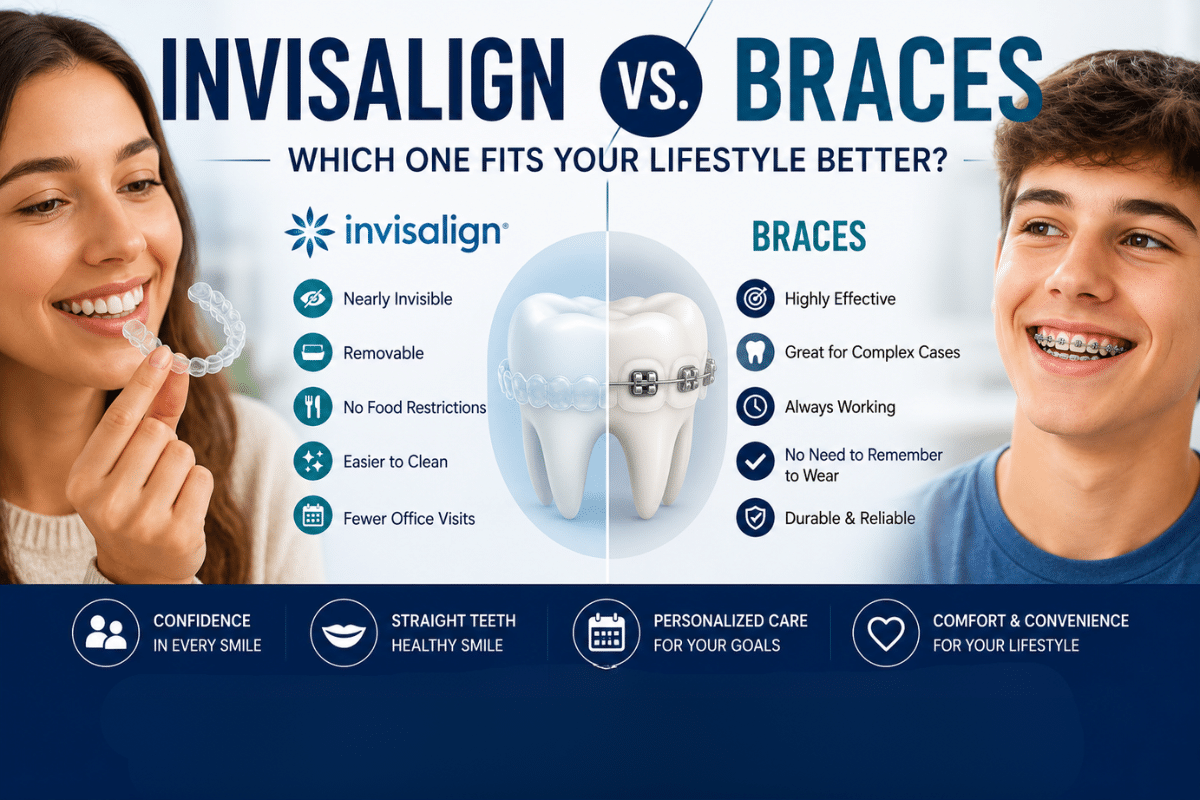
A straighter smile can do more than improve your appearance—it can boost your confidence, support better oral health, and make everyday activities like eating and speaking more comfortable. If you’re researching Invisalign vs. Braces, you’re not alone. It’s one of the most common questions people ask when considering orthodontic treatment.
Whether you’re a busy professional, a college student, or a parent exploring options for your teenager, understanding the differences between these treatments is the first step toward making the right decision.
At Legend Dental & Orthodontics, we help patients make informed choices based on their lifestyle, dental needs, and long-term goals. Under the care of Dr. Bryan Hassler, every treatment plan is personalized to deliver healthy, confident smiles—not just straight teeth. Whether you’re closer to Georgetown or Austin, we’re here to provide personalized treatment recommendations in a welcoming, patient-focused environment.
Why Straight Teeth Matter
Orthodontic treatment isn’t only about aesthetics. Properly aligned teeth are easier to clean, can reduce uneven wear, and may help lower the risk of cavities and gum disease. Correcting bite issues can also improve chewing and reduce strain on your jaw.
When comparing Invisalign vs. Braces, it’s important to look beyond appearance and consider how each option supports your overall oral health.
Invisalign vs. Braces: What’s the Difference?
Both Invisalign and traditional braces are designed to move teeth into better alignment. The biggest difference lies in how they do it.
- Invisalign uses a series of custom-made, clear plastic aligners that gradually shift your teeth.
- Braces use metal or ceramic brackets connected by wires that are adjusted over time.
Both treatments are highly effective, but the right option depends on your orthodontic needs and daily routine.
Invisalign vs. Braces at a Glance
| Feature | Invisalign | Traditional Braces |
|---|---|---|
| Appearance | Nearly invisible | Metal or ceramic brackets |
| Removable | Yes | No |
| Eating Restrictions | None (remove aligners before meals) | Avoid sticky, hard, or chewy foods |
| Oral Hygiene | Easier to brush and floss | Requires extra care around brackets |
| Office Visits | Usually fewer | Regular adjustments required |
| Best For | Mild to moderate alignment issues | Mild to complex orthodontic cases |
| Compliance | Must be worn 20–22 hours daily | Works continuously without removal |
Benefits of Invisalign
Many adults and teens choose Invisalign because it fits seamlessly into busy lifestyles.
Some advantages include:
- Nearly invisible appearance
- Comfortable, smooth aligners
- Removable for meals and brushing
- No food restrictions
- Easier oral hygiene
- Fewer emergency appointments
- Great for professionals and students
When discussing Invisalign vs. Braces, appearance is often the deciding factor for adults who want a discreet treatment option.
Benefits of Traditional Braces
Traditional braces remain one of the most reliable orthodontic treatments available, especially for more complex cases.
Benefits include:
- Effective for severe crowding and bite issues
- No need to remember to wear aligners
- Suitable for patients of almost any age
- Constant tooth movement without relying on patient compliance
- Available in metal and less noticeable ceramic options
For patients with significant orthodontic concerns, braces may provide more predictable results.
Which Option Fits Your Lifestyle?
When evaluating Invisalign vs. Braces, think about your daily habits.
Invisalign May Be Right for You If You:
- Prefer a discreet appearance
- Attend frequent meetings or social events
- Play sports or musical instruments
- Want the flexibility to remove aligners when eating
- Can commit to wearing aligners for at least 20–22 hours each day
Braces May Be Better If You:
- Have complex alignment or bite issues
- Prefer a treatment that doesn’t rely on daily discipline
- Are treating younger children or teens who may forget to wear aligners
- Want a solution that works continuously
Treatment Time
One of the biggest questions about Invisalign vs. Braces is how long treatment takes.
The answer depends on the complexity of your case.
- Invisalign treatment often ranges from 12 to 18 months for mild to moderate cases.
- Traditional braces typically take 18 to 24 months, although some cases may require more or less time.
Your orthodontic evaluation will provide a personalized estimate based on your smile goals.
Cost Considerations
While cost is important, it shouldn’t be the only factor in your decision.
Both Invisalign and braces represent an investment in your long-term oral health. Treatment costs vary depending on the complexity of your case, treatment length, and insurance coverage.
During your consultation at Legend Dental & Orthodontics, our team will explain your treatment options, discuss financing solutions, and help you understand the value of each approach.
Meet Dr. Bryan Hassler
At Legend Dental & Orthodontics, patients receive compassionate, evidence-based care from Dr. Bryan Hassler, who is dedicated to helping patients achieve healthy, confident smiles.
Dr. Hassler believes every orthodontic treatment plan should be personalized. He takes time to understand each patient’s concerns, explain available options clearly, and recommend solutions based on clinical findings, lifestyle, and long-term oral health goals. His patient-first philosophy has helped families feel confident throughout every stage of treatment.
Trusted Orthodontic Resources
Learning from trusted organizations can help you make informed decisions about orthodontic care.
| Organization | Why It’s Trusted |
|---|---|
| American Dental Association (ADA) | Offers evidence-based information on oral health and orthodontic care. |
| American Association of Orthodontists (AAO) | Provides expert guidance on braces, Invisalign, and orthodontic treatment. |
| National Institute of Dental and Craniofacial Research (NIDCR) | Publishes research-backed information on oral health conditions and treatments. |
| Centers for Disease Control and Prevention (CDC) – Oral Health | Shares preventive oral health recommendations for children and adults. |
These organizations promote evidence-based dental care and help patients understand their treatment options.
Frequently Asked Questions
1. Is Invisalign as effective as braces?
Yes, Invisalign is highly effective for many mild to moderate orthodontic cases. Traditional braces may be recommended for more complex tooth movements or bite corrections.
2. Which is more comfortable: Invisalign or braces?
Most patients find Invisalign aligners more comfortable because they don’t have brackets or wires that may irritate the cheeks and gums. However, some temporary pressure is normal as teeth begin to move.
3. Can I eat whatever I want with Invisalign?
Yes. Since Invisalign aligners are removable, you can enjoy your favorite foods after taking them out. Just remember to brush your teeth before putting the aligners back in.
4. How many hours should Invisalign be worn each day?
For the best results, Invisalign aligners should be worn 20–22 hours per day, removing them only for eating, drinking anything other than water, brushing, and flossing.
5. How do I know whether Invisalign or braces are right for me?
A comprehensive orthodontic evaluation is the best way to determine the right treatment. Your dentist or orthodontic provider will assess your teeth, bite, oral health, and smile goals before recommending the most suitable option.
Final Thoughts
Choosing between Invisalign vs. Braces comes down to your individual needs, lifestyle, and orthodontic goals. Invisalign offers flexibility and a nearly invisible appearance, while braces remain an excellent choice for treating more complex alignment issues.
The best way to determine which option is right for you is through a professional orthodontic evaluation. If you’re unsure which solution is right for you, let the experienced team at Legend Dental & Orthodontics help you make an informed decision.
Whether you’re closer to Georgetown or Austin, we’re here to provide personalized treatment recommendations in a welcoming, patient-focused environment.
|
Location |
Phone |
| Legend Dental & Orthodontics – Georgetown | +1 (512) 843-0062 |
| Legend Dental & Orthodontics – Austin |